You’re debugging a 2019 production model when you notice something odd in the comments: “perceptron logic adapted from Rosenblatt 1958.” Sixty-one years between a research paper and a payment fraud system. That’s not a historical curiosity — that’s the entire historical development of artificial intelligence compressed into a single line of legacy code.
Most developers treat AI history like legacy docs: something you skim once, then ignore. But the historical development of artificial intelligence isn’t a museum tour. It’s a map of every constraint, failure, and pivot that built the tools you’re using right now.
The patterns repeat. The hype cycles loop. And if you don’t know where the seams are, you’ll rediscover them the hard way.
Table of Contents
The 1950s: When AI Got Its Name
Alan Turing published “Computing Machinery and Intelligence” in 1950, but the historical development of artificial intelligence as a formal discipline started in 1956. John McCarthy coined the term at the Dartmouth Conference, pitching a summer project to simulate human intelligence.
They thought it would take a few months.
The Dartmouth attendees — McCarthy, Marvin Minsky, Claude Shannon, Nathaniel Rochester — laid out ambitious goals: natural language processing, neural networks, abstraction. None of it worked at scale. But the optimism was real. Early programs like Logic Theorist (1956) proved mathematical theorems. ELIZA (1966) faked conversation well enough to fool non-technical users.
The problem wasn’t vision. It was compute and data.
Machines in the 1950s had kilobytes of memory. Training a model meant hand-tuning weights on punch cards. The ideas were sound. The infrastructure didn’t exist.
The First AI Winter: 1974-1980
By the early 1970s, funding agencies noticed a pattern: grand promises, minimal results. The Lighthill Report (1973) in the UK gutted AI research funding. DARPA followed in the US. Researchers who’d promised human-level intelligence within a decade delivered chess programs that lost to amateurs.
This wasn’t a failure of theory. It was a failure of honesty about constraints.
The first AI winter wasn’t caused by bad ideas — it was caused by bad timelines.
Frank Rosenblatt’s perceptron (1958) could classify linearly separable data. But Minsky and Papert’s 1969 book Perceptrons showed it couldn’t solve XOR without hidden layers. The hardware to train multi-layer networks didn’t exist. So the idea sat dormant for fifteen years.
Breakthroughs that arrived too early got shelved until infrastructure caught up.
The Expert Systems Boom: 1980s
AI came back as expert systems — rule-based programs that encoded human expertise. MYCIN (1976) diagnosed blood infections. XCON (1980) configured VAX computers for Digital Equipment Corporation, saving millions annually.
These systems worked because they avoided the hardest problems.
No learning. No ambiguity. Just if-then rules curated by domain experts. They were brittle, but they shipped.
Companies poured money into AI labs. Lisp machines sold for $100,000 each. Japan launched the Fifth Generation Computer Project in 1982, aiming to leapfrog Western AI research with parallel processing and logic programming.
Then the bubble popped again.
Expert systems couldn’t scale. Every new domain required months of knowledge engineering. Maintenance costs exploded. By 1987, the AI hardware market collapsed. Lisp machine companies folded. The second AI winter hit harder because it followed real commercial deployment.
The Quiet Rebuild: 1990s
While the term “AI” became toxic in boardrooms, researchers rebranded and retooled. Machine learning emerged as the pragmatic alternative — systems that improved from data instead of hand-coded rules.
Yann LeCun’s convolutional neural networks (CNNs) read handwritten digits for the US Postal Service in 1989. Not because CNNs were new (Fukushima’s Neocognitron came out in 1980), but because backpropagation and faster hardware finally made training feasible.
The 1990s delivered incremental wins:
- Support Vector Machines (1995) handled high-dimensional data elegantly
- Random Forests (2001) became the go-to for tabular data
- IBM’s Deep Blue beat Garry Kasparov at chess in 1997 using brute-force search, not learning
These weren’t headline-grabbing breakthroughs. They were tools that worked reliably in production. CNNs continued evolving in academic labs, but most commercial applications stuck to simpler models.
If you wanted to classify images in 1999, you hand-crafted features and trained an SVM.
The Deep Learning Revolution: 2006-2012
Geoffrey Hinton’s 2006 paper on deep belief networks cracked a training problem that had blocked neural networks for decades: how to initialize weights in deep architectures. Suddenly, networks with many layers could learn useful representations.
But the real catalyst was ImageNet.
In 2012, Alex Krizhevsky’s CNN (AlexNet) won the ImageNet competition by a 10% margin — a gap so large it ended the debate about whether deep learning worked. The model trained on two GPUs for a week. That combination — big datasets, deep networks, GPU compute — changed everything.
The historical development of artificial intelligence accelerated faster in the next decade than in the previous fifty years combined.
Within three years:
- Speech recognition error rates dropped by half
- Machine translation shifted from phrase-based models to neural networks
- Reinforcement learning agents started beating humans at Atari games
The timeline from 2012 onward reads like a highlight reel: AlphaGo (2016), Transformer architecture (2017), GPT-2 (2019), GPT-3 (2020). Each milestone built on infrastructure — cloud compute, open datasets, frameworks like TensorFlow and PyTorch — that didn’t exist five years earlier.
We’ve seen clients migrate from rule-based systems to deep learning models and cut error rates by 60% in domains like handwriting recognition, where CNNs finally matched human accuracy on real-world forms.
2020s: Generative AI and Scale
GPT-3 (2020) had 175 billion parameters. GPT-4 (2023) is rumored to be even larger, though OpenAI stopped disclosing architecture details. The shift from discriminative models (classify this image) to generative models (create this image) changed what AI could do in production.
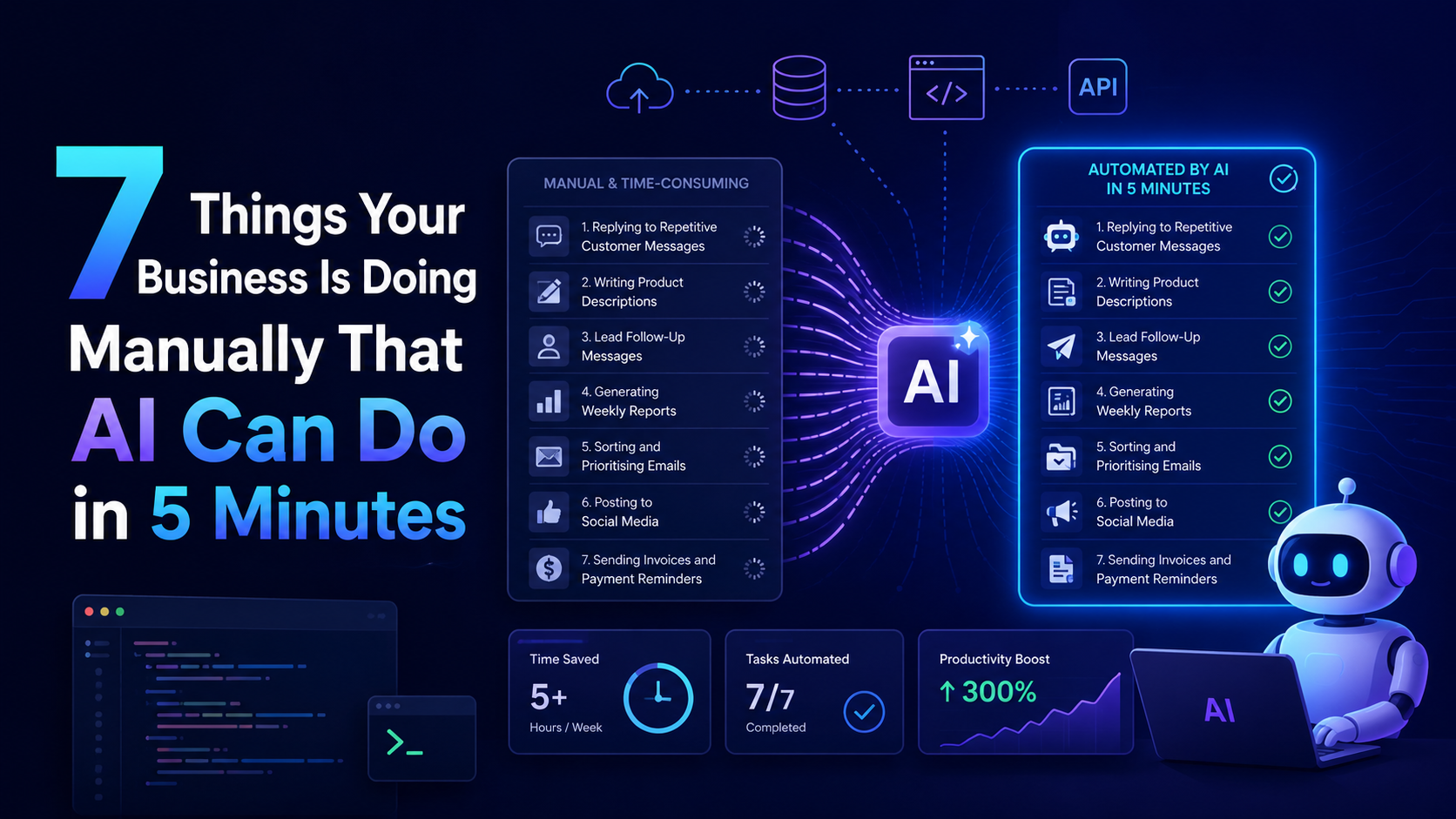
Suddenly, business tasks that took hours could be automated in minutes: drafting emails, summarizing documents, generating code.
Not perfectly. But well enough to ship.
The constraint is no longer compute — it’s trust.
A model that hallucinates 5% of the time is useless for legal contracts but fine for brainstorming. The historical development of artificial intelligence in the 2020s is less about new architectures and more about reliability engineering: guardrails, fine-tuning, retrieval-augmented generation.
Enterprises running AI workloads at scale need infrastructure that didn’t exist three years ago. Tools like GPU resource scheduling on Ubuntu let teams allocate compute dynamically instead of provisioning dedicated hardware per model.
The historical pattern holds: breakthroughs in algorithms get bottlenecked by infrastructure, then infrastructure catches up and the next wave hits.
What the Historical Development of Artificial Intelligence Actually Teaches
If you trace the historical development of artificial intelligence from 1956 to today, three patterns emerge:
AI progress is exponential in hindsight, linear in real time. The Dartmouth attendees weren’t wrong about the goals. They were wrong about the timeline by fifty years.
Hype cycles are structural, not accidental. Every decade, someone claims general intelligence is five years away. Every decade, they’re wrong. The gap between research demos and production reliability is always wider than it looks.
Infrastructure unlocks algorithms retroactively. Backpropagation was published in 1986. It didn’t matter until GPUs made training deep networks feasible in 2012. Transformers were published in 2017. They didn’t dominate until cloud providers made it cheap to train 100-billion-parameter models.
We keep revisiting the same ideas — neural networks, symbolic reasoning, reinforcement learning — with better tools each time.
Where AI Is Actually Headed
The next five years won’t look like the last five. Scaling laws are flattening. GPT-5 won’t be 10x better than GPT-4 the way GPT-3 was 10x better than GPT-2. The low-hanging fruit — text generation, image synthesis, code completion — is picked.
What’s left is harder:
- Reasoning under uncertainty
- Long-term planning in dynamic environments
- Models that learn continuously instead of requiring full retraining
- AI that integrates into existing systems without rearchitecting everything
The next breakthrough won’t come from bigger models. It’ll come from better integration, better tooling, and better understanding of when not to use AI.
Developers who know the history won’t chase every new model release. They’ll ask the same questions researchers should have asked in 1956: What’s the actual constraint? What infrastructure do we need? And what problem are we really solving?
Because the historical development of artificial intelligence isn’t a story about intelligence. It’s a story about infrastructure, patience, and the gap between what’s possible in a lab and what’s reliable in production.
Frequently Asked Questions
What is the historical development of artificial intelligence?
The historical development of artificial intelligence spans from the 1950s Dartmouth Conference, where John McCarthy coined the term, through multiple boom-and-bust cycles, to today’s generative AI era. It’s marked by periods of optimism (1950s, 1980s, 2010s) followed by “AI winters” when funding dried up after promises outpaced results. Each cycle built on better infrastructure — from punch cards to GPUs — that eventually made earlier ideas practical.
What were the key milestones in AI history?
Key milestones include the Dartmouth Conference (1956), Frank Rosenblatt’s perceptron (1958), the expert systems boom (1980s), Geoffrey Hinton’s deep belief networks (2006), AlexNet winning ImageNet (2012), AlphaGo defeating Lee Sedol (2016), and GPT-3’s release (2020). Each milestone built on infrastructure improvements as much as algorithmic breakthroughs. AlexNet, for example, succeeded because GPUs finally made training deep CNNs feasible, not because the architecture was fundamentally new.
Why did AI experience multiple winters?
AI winters occurred when research promises outpaced practical results. The first (1974-1980) followed overhyped claims about achieving human-level intelligence within a decade. The second (1987-1993) came after expert systems proved too brittle to scale beyond narrow domains. Both were caused by underestimating infrastructure constraints — limited compute, small datasets, inadequate training methods — and overestimating near-term capabilities.
How did deep learning change AI development?
Deep learning, especially after 2012’s AlexNet breakthrough, shifted AI from hand-crafted features to learned representations. GPU compute and large datasets (like ImageNet) made training deep neural networks practical for the first time. This enabled breakthroughs in image recognition, speech processing, and eventually generative models. Within three years of AlexNet, speech recognition error rates dropped by half and machine translation shifted entirely to neural approaches.
What’s the difference between narrow AI and general AI in historical context?
Every deployed AI system in history has been narrow — designed for specific tasks like playing chess, recognizing images, or generating text. General AI (human-level intelligence across domains) has been predicted as “five years away” since the 1956 Dartmouth Conference but remains theoretical. The historical development of artificial intelligence is entirely a history of narrow AI becoming more capable within constrained domains, not a progression toward general intelligence.